The winds were less than 5 knots from the south. We were going to motor from our multi-day anchorage in Rock Hall, Maryland to a small quiet creek, Harness Creek, just south of Annapolis. It would take just under three hours. There are many walking/ biking trails, so in addition to a short family hike, Scott planned to bike up to the local West Marine Store about two miles from the nearby dinghy dock for supplies.
On the transit, we were converging with several other boats, all of which were also motoring or motor sailing, to navigate under the tallest uprights of the Chesapeake Bay Bridge. Scott took the helm and I made lunch for him and Jenna. I was also taking pictures of a large container ship. I was trying to find a way to capture scale. We have crossed closer to these mammoth vessels. They move faster than one might think. This one was packed with containers, likely headed for the Port of Baltimore.

I had just started to prepare my lunch, when I heard engines and the surge of water from behind our starboard hull. I stared past our stern (the rear of the boat). Okay. “Um, Scott, did you see that the boat behind us?” The flashing blue lights and the unmistakable, orange-red hull labelled with black letters: U.S. Coast Guard. We are about to be boarded. This is a first for us!
They have asked for permission to come aboard and conduct an inspection. Of course, we granted permission. It is courteous for them to “ask first.” Technically, we know that any vessel in US waters can be boarded at any time, for any reason. This falls under the policy, treat them with the same respect, you expect them to treat you. We maintained our heading and speed through the water of about 7 knots. The coast guard vessel matched our speed and two members stepped onto our port side. We were asked for identification and boat registration papers. This was followed with questions about where we were coming from and where we were headed to. I took over the helm while Scott pulled out our papers. The inspection continued with a review of our onboard life vest status, the location and expiration dates on our fire extinguishers and our dinghy registration info. Both guardsmen were polite and intrigued by the catamaran. One of the two was still in training, or at least, we think so because he was not familiar with all the lines on their paperwork and often needed to request clarification from the lead team member. Everyone needs to start somewhere.
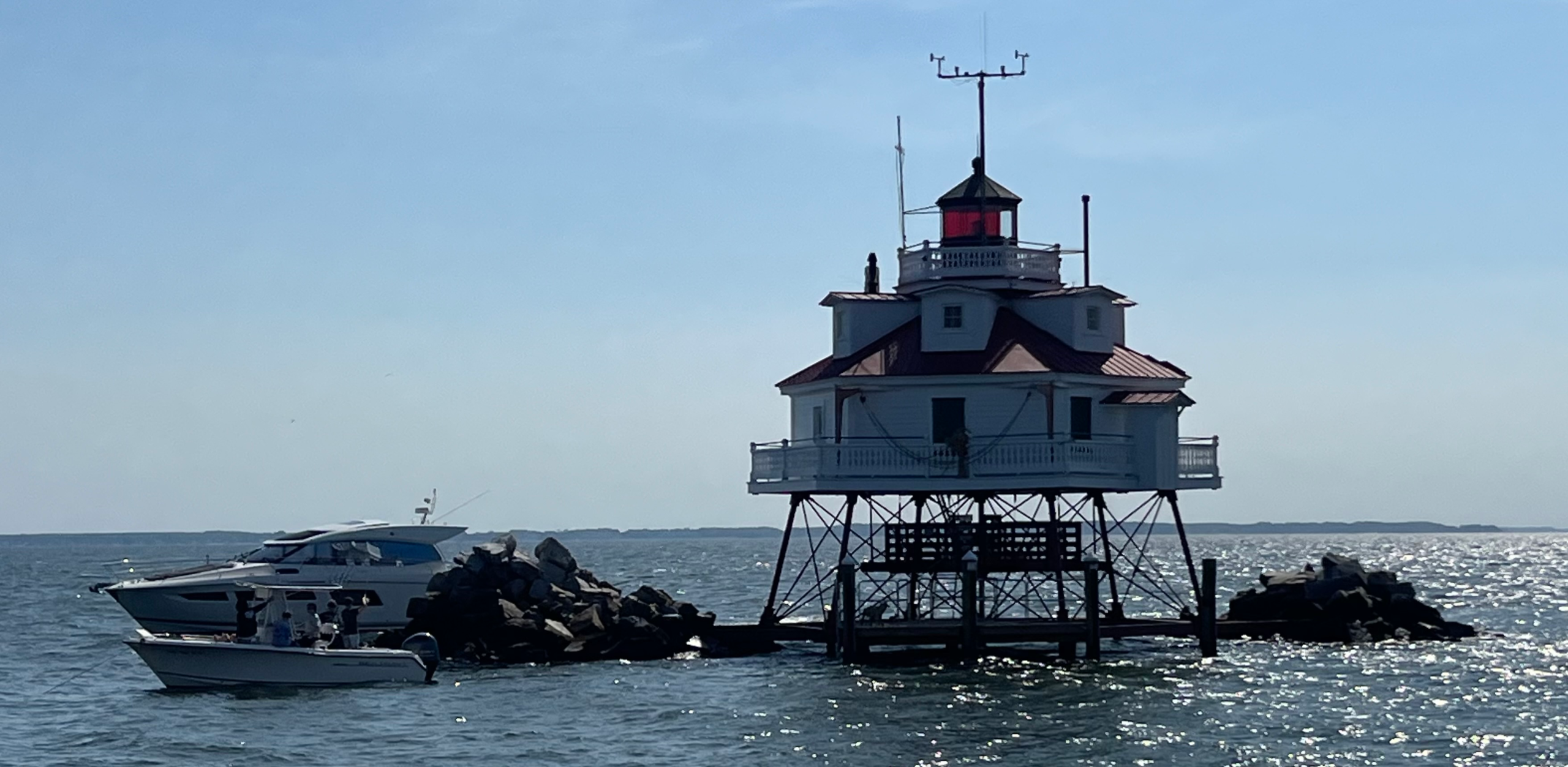
I ask: “Can you let them know that I am going to turn 30 degrees to starboard after that lighthouse to head for our destination?” “No problem.” Everything was in order. Our fire extinguishers had just been inspected this past summer, so they had new inspection stickers. A few other quick questions and they were on their way. I only thought to grab pictures after they had already re-boarded their original vessel and were pulling away.


Then we got a little disoriented, did we just miss our turn….. again? Almost. Not quite. The turn I had made, needed to be more like 90 degrees to starboard, rather than 30. So, I almost missed our exit. It was just unfortunate timing for an unexpected handover from Scott to me and I back to him. I had been looking at land maps before arriving and less about the navigation approach to our anchorage. It was just a bit “distracting.” This should not be misinterpreted. We were not upset with the inspection process. It was all completed in less 20 minutes.
We are grateful for the efforts of the Coast Guard and all they do to keep the boating community safe. We are glad that they train hard to do what they do.

We anchored up the creek and carried on with our plans. The anchorage was gorgeous and we seemed to have only a few other boats, but it quickly filled in with others within a few hours of our arrival.

